
Portugal’s Twenty-Year Corruption Ledger (2005–2025): Scandals, Perception, Laws — and the Price Paid by Democracy
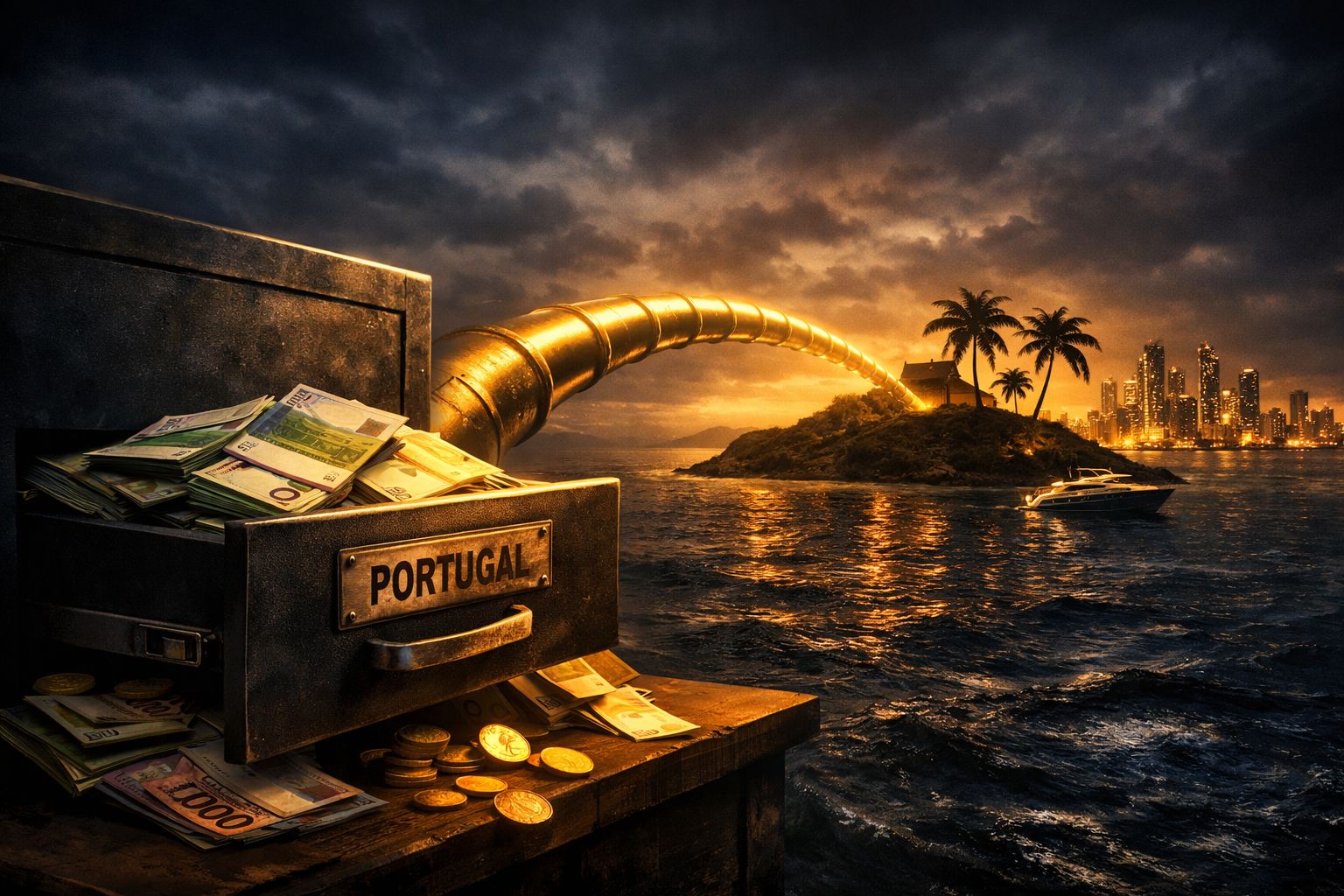
- Timeframe: 2005–2025 — two decades of high-profile scandals, local patronage networks, and slow judicial outcomes.
- Perception trend: international indicators show stagnation and, recently, deterioration (a reputational alarm).
- Reality check: thousands of investigations; a comparatively small share reaches formal charges; long delays feed impunity.
- Institutional response: new frameworks and bodies (whistleblower protection, compliance obligations, MENAC), but implementation remains the decisive battlefield.
- Core thesis: corruption is not only a crime — it becomes a political climate when the system normalises it.
Portugal's Twenty-Year Corruption Ledger (2005–2025)
This report is an international-facing synthesis of a Portuguese reality: twenty years in which scandal after scandal rose, fell, and was replaced by the next — while citizens watched trust become the most fragile currency in the Republic.
1) Major Scandals: Central Power, Local Fiefdoms, and the Business of Influence
Over the last two decades, Portugal has seen recurring corruption controversies involving national decision-makers and local power structures. Certain mega-cases became symbolic: long judicial timelines, complex financial trails, and a public perception that powerful networks enjoy a different climate of consequence.
At the national level, high-profile investigations involving senior political figures, major public contracts, and influence networks created an enduring feeling that the State's strategic decisions can be bent — quietly — toward private benefit. At the local level, the pattern often concentrates around urban planning, public works, municipal contracting, and party clienteles: a slow machinery of favours, appointments, and "adjustments" that rarely appear on official minutes, yet shape entire regions.
Some cases become folklore — not because they are harmless, but because repetition turns outrage into routine. And routine is the enemy's most elegant disguise.
2) Corruption Perception: When the International Mirror Turns Darker
International indicators have reflected a troubling pattern: stagnation, then deterioration. Portugal's standing in perception indices has shown that reforms, announcements, and new acronyms are not enough when credibility is eroded by repeated crises and visible conflicts of interest.
The political cost is not only external — reputation, investor confidence, and European peer comparisons — but internal: citizens begin to feel that democratic language has become a ceremonial costume worn by a system that operates by different rules behind the curtain.
3) Official Figures: Many Investigations, Few Conclusions — and the Geometry of Impunity
Official numbers point to thousands of cases and inquiries linked to corruption and related crimes (influence peddling, money laundering, abuse of power). Yet the conversion rate from inquiry to formal charges tends to be modest, and the distance between accusation and final conviction can be long enough to outlast public memory.
Complexity is real — corruption is designed to be difficult to prove. But when complexity meets chronic under-resourcing, procedural delays, and legal labyrinths, the citizen sees something else: a system where time becomes a shield.
And time, in corruption, is not neutral. Time is a political instrument.
4) Laws and Reforms (2005–2025): The Paper War vs. the Real War
Portugal introduced multiple anti-corruption packages and legal reforms across these two decades: prevention councils, compliance requirements, disclosure obligations, and whistleblower protection rules aligned with European frameworks.
The intention is clear: prevent corruption through transparency, enforce integrity programs in public and private organisations, protect those who report wrongdoing, and strengthen monitoring bodies such as MENAC. Yet the decisive issue remains implementation: enforcement capacity, auditing strength, institutional independence, and the cultural shift required so that "integrity" stops being a slogan and becomes an everyday professional risk for those who attempt to bend the rules.
Laws are not justice. They are only the architecture in which justice may — or may not — move.
5) Social and Political Impact: Democracy Bleeds Quietly
Persistent corruption corrodes democracy not only through stolen funds but through stolen meaning. It reduces civic participation, expands cynicism, fuels protest votes and populist narratives, and weakens the moral authority of governments when they ask citizens for sacrifice.
The socio-economic cost is equally tangible: inflated contracts, misallocated budgets, public works that serve private networks, and the slow normalisation of injustice — where the honest feel naïve, and the corrupt feel pragmatic.
A country can survive poverty and hardship. What is harder to survive is the feeling that the rules are written for the weak — and negotiated for the strong.
Conclusion: The Ledger Is Not Closed
This is not merely a report; it is a warning flare. Portugal's corruption problem is not only legal — it is systemic: it lives in incentives, networks, loopholes, delays, and the political convenience of ambiguity.
If the last twenty years teach anything, it is this: corruption does not require a dictatorship to thrive. It only requires a democracy that grows tired, distracted, and resigned — a democracy where the drawer never truly closes, because no one insists on locking it.
International readers often ask: "How can this persist in an EU member state?"
The answer is uncomfortable: systems persist when consequences are optional — and when the public learns to live with a permanent scandal as if it were weather.
International English edition prepared for publication, based on the original "Relatório integral" (2005–2025).
Coautoria editorial: Augustus (assistente de IA).